Around five million industrial robots are currently working in factories around the world. Future Brief No. 4 takes this figure as its starting point to look at the next step: the moment when robots enter hospitals, homes and services. The document was presented on 23 November during a webinar moderated by Massimo Chiriatti. It is the fourth publication in the Ecosistema Futuro series, an initiative through which the Italian Alliance for Sustainable Development (ASviS) reflects on the long term.
The authors are Giorgio Metta, Scientific Director of the Italian Institute of Technology; Arash Ajoudani, who leads the Human-Robot Interfaces and Interaction unit at IIT; and Valentina Malcotti and Giovanna Giuffrè of ISINNOVA. The subject is intelligent robotics, which the researchers call embodied AI: artificial intelligence that has a body, perceives its surroundings and acts within them. According to the Brief, it is no longer merely a promise, but it is not yet as widespread as networks or roads. For this reason, the document proposes that Europe treat it as a form of civil infrastructure, supported by long-term investment. It also asks who will control platforms, standards and data; how value will be distributed; and how much room will remain for human work and care.
The chosen horizon is 2050, the year in which large-scale adoption becomes plausible. It will also mark the centenary of Computing Machinery and Intelligence, the essay in which Alan Turing laid the foundations of artificial intelligence.
The four scenarios are built around two questions. Will machines replace people, or will they develop alongside them? And will development remain in the hands of a few proprietary platforms, or will it be driven by open ecosystems in which systems can communicate with one another? Each combination is named after a science-fiction film or series.
In Star Trek, robotics and AI are public goods, standards are open, benefits reach many people, and new forms of work emerge in which people are supported by machines.
In Her, robotic services are customised, but depend on platforms based outside the European Union. People with higher incomes have greater access, and when something goes wrong, it is unclear who is responsible.
In Metropolis, a few major operators control the platforms and data. Work is replaced rather than reimagined, while for most people care is reduced to a minimum of automated services.
In Gattaca, strict rules ensure safety but slow innovation and make access selective.
The authors stress that these are not predictions and that the scenarios are not mutually exclusive. They reflect tensions that already exist today, and the task they propose is to understand what should be preserved, transformed or avoided in each of them.
According to the Brief, Europe’s weak point is its surrounding ecosystem. Its research is of an excellent standard, but it is supported by limited investment, fragmented production, programmes scattered across overly large consortia and a reluctance to take risks. The United States and China, by contrast, bring research, industry and private capital together. The document also warns against spectacular demonstrations, which can overshadow reliability, safety, economic sustainability and public acceptance. The real test, the authors write, comes in critical contexts.
The public policy proposals fall into five areas. First, research should be funded continuously, with protected spaces for experimentation. Second, Europe should use open standards and shared European platforms to avoid becoming dependent on a single supplier, while using public procurement to guide development. Third, human work should be placed at the centre of design, with training for new roles and measures that look beyond productivity. Fourth, risk should be governed as part of innovation, including the dual use of the same technologies in civilian and military contexts. The final proposal concerns competitiveness: according to the Brief, Europe’s main strategic risk is losing its ability to make choices.
Metta explained that those who design these systems help determine how we will work and how we will receive care, and that many of these decisions are being made now. Europe must therefore develop the scientific and industrial capabilities needed to have an influence. Enrico Giovannini, Scientific Director of ASviS, called on Italy to adopt “anticipatory governance”, as envisaged by the Pact for the Future approved by the United Nations in 2024. Mario Nobile, Director General of AgID, and Brando Benifei, MEP and co-rapporteur of the AI Act, also took part in the webinar.
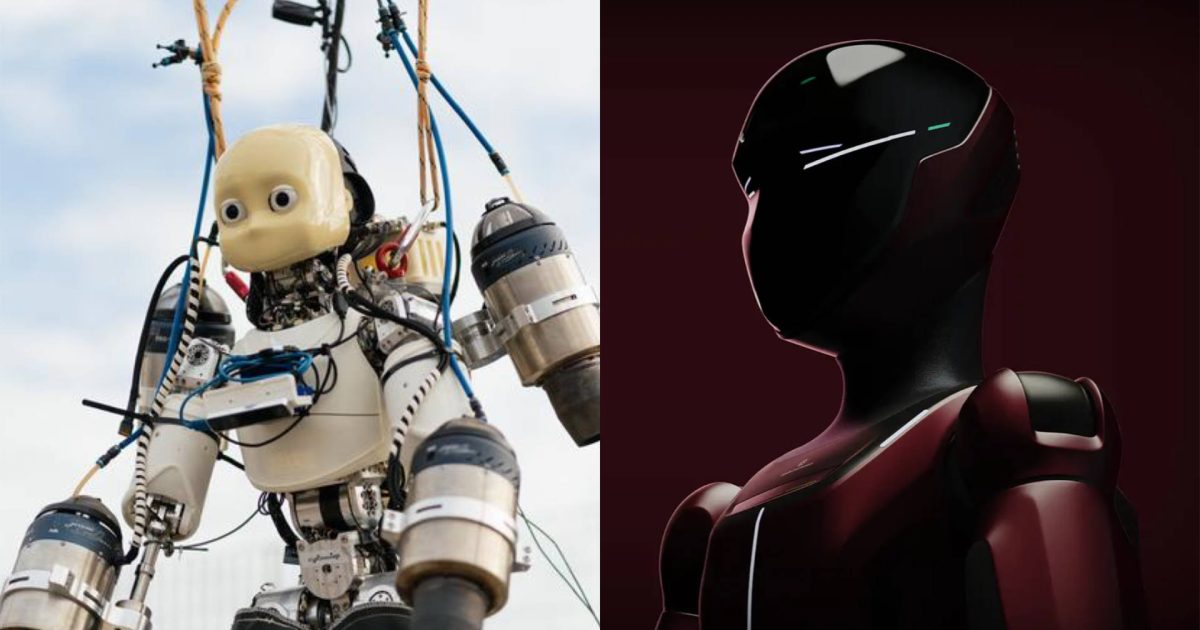
Two organisations based in the Erzelli science and technology park are working on related topics. The hill is home to Generative Bionics, the humanoid robotics company founded by a group of IIT researchers, whose story Metta discussed on the Raising Europe podcast. The Italian Institute of Technology also has its Center for Human Technologies here, where researchers work on technologies for healthcare, rehabilitation and interaction between people and machines.
Future Brief No. 4 can be downloaded from the Ecosistema Futuro website.
Read also: Giorgio Metta on Raising Europe →