In the construction sector, falls from height cause an average of 130 deaths every year. The prototype developed by the Italian Institute of Technology with INAIL is designed for those working at height and adds to existing fall protection systems: it is an airbag worn like a vest.
The device has two parts. The first is a detection system that recognises the wearer’s activity and distinguishes a real fall from a sudden movement, so the airbag is not triggered by an abrupt gesture. The second is the airbag itself, which inflates in a few milliseconds thanks to replaceable gas cartridges. It protects the torso, front and back, and extends to cover the hips, shoulders and neck.
It was developed by the Exoskeletons Lab (XoLab) of IIT’s Advanced Robotics department, as part of the “Cadute dall’alto” (Falls from Height) project with INAIL. The prototype had already been presented at Maker Faire Rome in 2023; this year it returned to the fair, held from 23 to 25 October at the Gazometro Ostiense, and RaiNews featured it in a report on Andrea Bettini’s programme Futuro24. Sergio Leggieri, a postdoctoral researcher at XoLab, explains how it works.
Exoskeletons for the back
In the same space, IIT showcased XoTrunk and FleXoTrunk, two exoskeletons also developed with INAIL for workers who lift loads by hand. Back injuries account for almost a third of reported workplace accidents. XoTrunk is an active exoskeleton: two electric motors adjust the assistance according to the wearer’s movements and ease the repeated lifting of loads of up to around 20 kg. It has already been tested outside the laboratory, in a logistics warehouse, with six workers assigned to palletising. FleXoTrunk provides lighter assistance, with the adaptability of an active device.
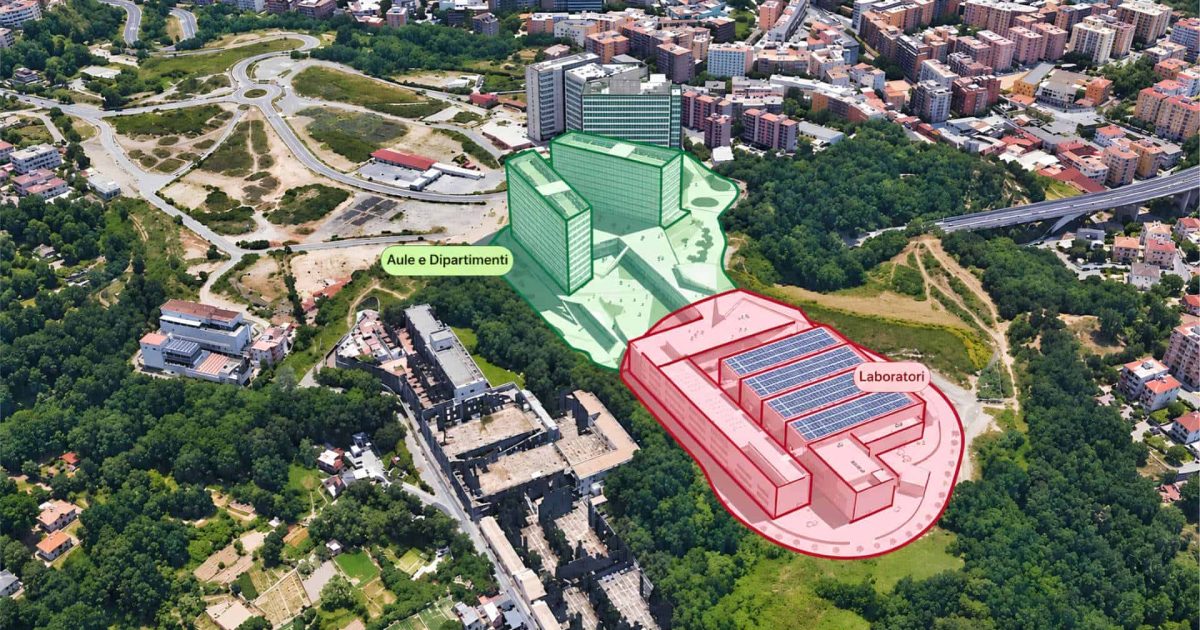
The Italian Institute of Technology is also one of the organisations based in the Erzelli Science and Technology Park. On the hill it has its Center for Human Technologies, opened in 2019, where work focuses on technologies for health, rehabilitation and interaction between people and machines.