The Humanoid Robot Walking in Erzelli
Daniele Pucci and his team spent twenty years at IIT building prototypes. In 2024, they founded Generative Bionics. In 2025, 70 million euros. Today, GENE.01 walks outside the laboratory.
There has been a video circulating on LinkedIn for a few months. A humanoid robot is walking outdoors, not in a lab. It moves on an irregular surface, adapts, and doesn’t fall. The post’s title reads: “Italian humanoids are roaming in the wild.”
The robot is named GENE.01. It was built in Genoa.
Twenty years of research in one company
The Italian Institute of Technology has had a humanoid robotics department active for over twenty years. In that department, more than sixty robot prototypes have been designed, built, and tested. Some of these have been distributed as research platforms to laboratories worldwide.
Daniele Pucci is the head of that department. In July 2024, along with Alessio Del Bue, Marco Maggiali, and Andrea Pagnin—all IIT researchers—he founded Generative Bionics. He didn’t start from scratch: IIT granted the company exclusive licenses for technologies developed in Italy over two decades of public research.
Seventy engineers and AI researchers moved from IIT to Generative Bionics. It is the largest technology transfer operation in the institute’s history.

70 million euros
In December 2025, Generative Bionics closed a 70-million-euro funding round. For the European deep tech sector, it is the most significant round of the year.
Investors include the Artificial Intelligence Fund of CDP Venture Capital, AMD Ventures, Duferco, Eni Next, RoboIT, and Tether.
This is not a random figure. It means that those with the data to evaluate these types of companies-funds specialized in deep tech, corporate arms of AMD and Eni, and the main Italian public vehicle for venture capital-have decided that what Generative Bionics is building is worth the bet.
What it builds, exactly
GENE.01 is the first humanoid robot designed to work in real industrial environments. It is not intended for demonstrations or laboratories: the commercial launch is scheduled for the fourth quarter of 2026.
The system is based on what is known in robotics as “Physical AI”: intelligence is not centralized in a processor but distributed throughout the robot’s body. Tactile skin covers the entire surface and contains a dense network of contact and force sensors. This allows the robot to adapt in real-time to the physical environment, recognize a risky grip before it becomes a problem, and learn directly from interaction with objects and people.
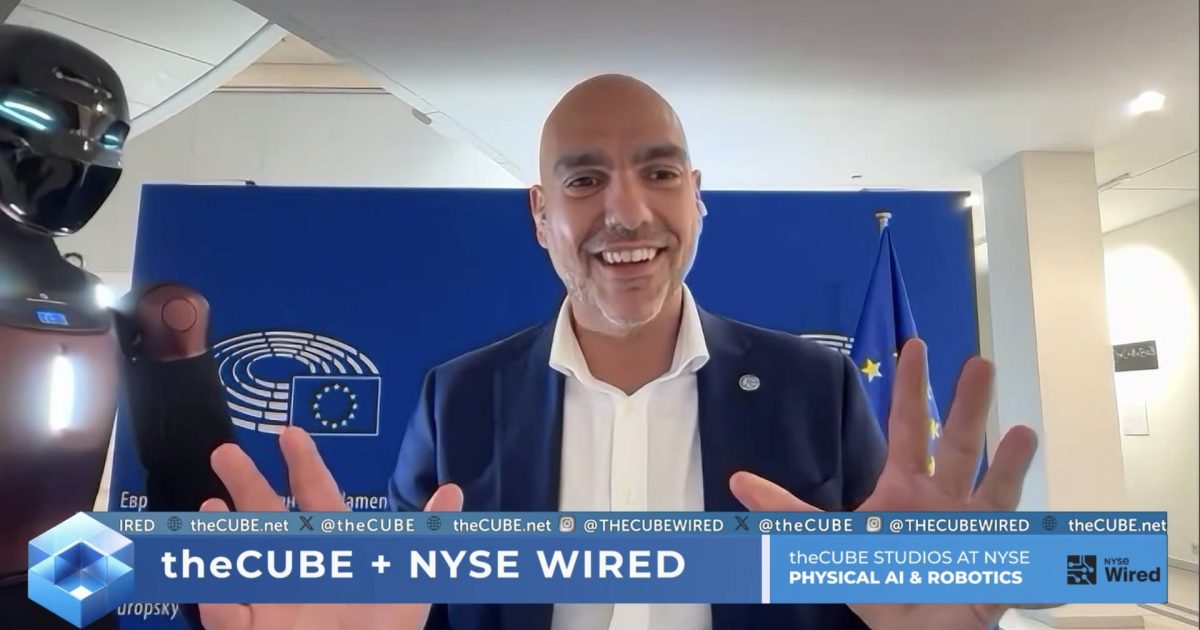
“We designed a humanoid that is as efficient as it is intelligent, inspired by human beings where intelligence resides not only in the brain but also in the body.”
Daniele Pucci ⦁ CEO Generative Bionics — AMD keynote, CES 2026, Las Vegas
At CES in Las Vegas in January 2026, GENE.01 was presented on the main stage during the AMD keynote, alongside Lisa Su. For a startup founded eighteen months earlier, this is an unusual positioning.
Why this story belongs to Erzelli
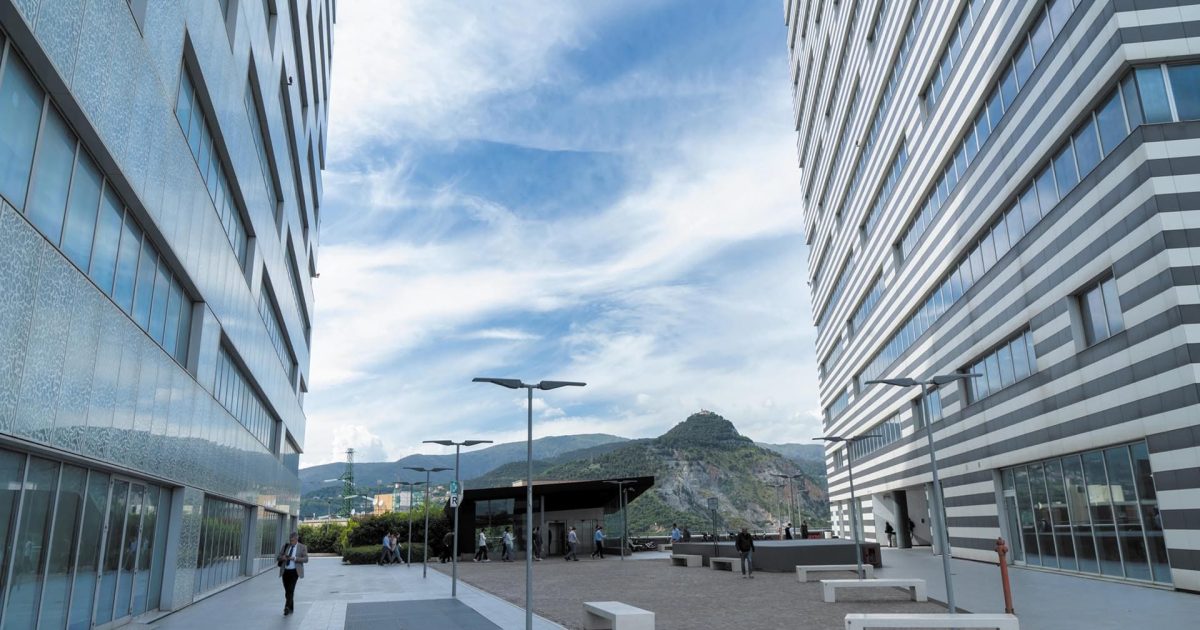
Generative Bionics was not born in a garage in San Francisco or on an American campus. It was born in the laboratories of the IIT Center for Human Technologies, located at Erzelli.
This is the mechanism that a science and technology park should produce: twenty years of public research becoming a private company, raising European capital, and bringing a product to the global market. All within a radius of a few hundred meters.
GENE.01 is walking outside the laboratory. It is walking on a hill in Genoa.